

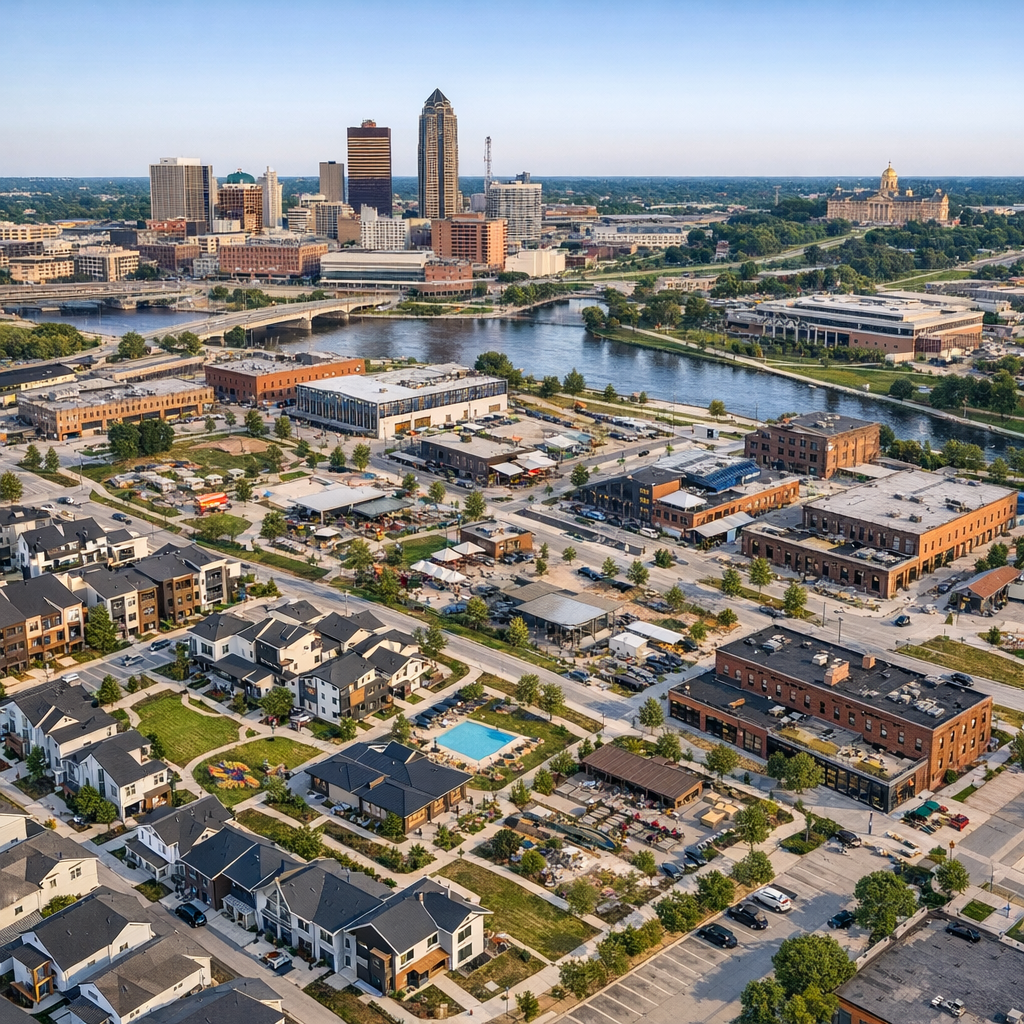
Des Moines is witnessing a surge in innovative housing projects aimed at addressing the city’s evolving needs. From repurposing underutilized properties to strategic urban planning, these initiatives are reshaping the local real estate landscape.
Transforming Underused Spaces
The Polk County Housing Trust Fund has identified approximately 740 underutilized properties across the Des Moines metro area, including church parking lots, strip malls, and vacant office parks. These sites are being considered for conversion into affordable ‘missing middle’ housing, such as duplexes and cottage courts. This approach seeks to bridge the gap between single-family homes and large apartment complexes, catering to individuals earning at or below 80% of the area median income. However, regulatory challenges remain a barrier to these developments. A listening session is planned for fall 2026 to guide faith-based organizations interested in developing housing on their property.
Revitalizing Flood-Prone Areas
Significant investments in flood prevention have led to the revival of areas like George Flagg Parkway. The city has spent tens of millions on levee improvements, prompting federal officials to lift flood-related property restrictions. This has paved the way for new developments, including the expansion of Jasper Winery, which plans to construct a commercial event venue and cider house. Additionally, a $2 million ‘flex office’ building is proposed for a city-owned plot near Southwest 28th Street. These projects signal a broader economic and developmental resurgence following flood mitigation efforts.
Strategic Economic Planning
West Des Moines is finalizing its first major economic development strategic plan since 2017, aimed at guiding city development over the next decade. Traditionally reliant on finance and insurance, the city is now considering diversifying into sectors like ag tech, cold storage, and specialty food manufacturing. This strategic shift aims to address potential challenges from AI’s impact on white-collar jobs and the slowing expansion of data centers. The plan includes 56 recommendations and is expected to be presented to the city council on June 1.
These developments reflect Des Moines’ proactive approach to urban planning and housing, ensuring the city remains adaptable and responsive to the needs of its residents.