

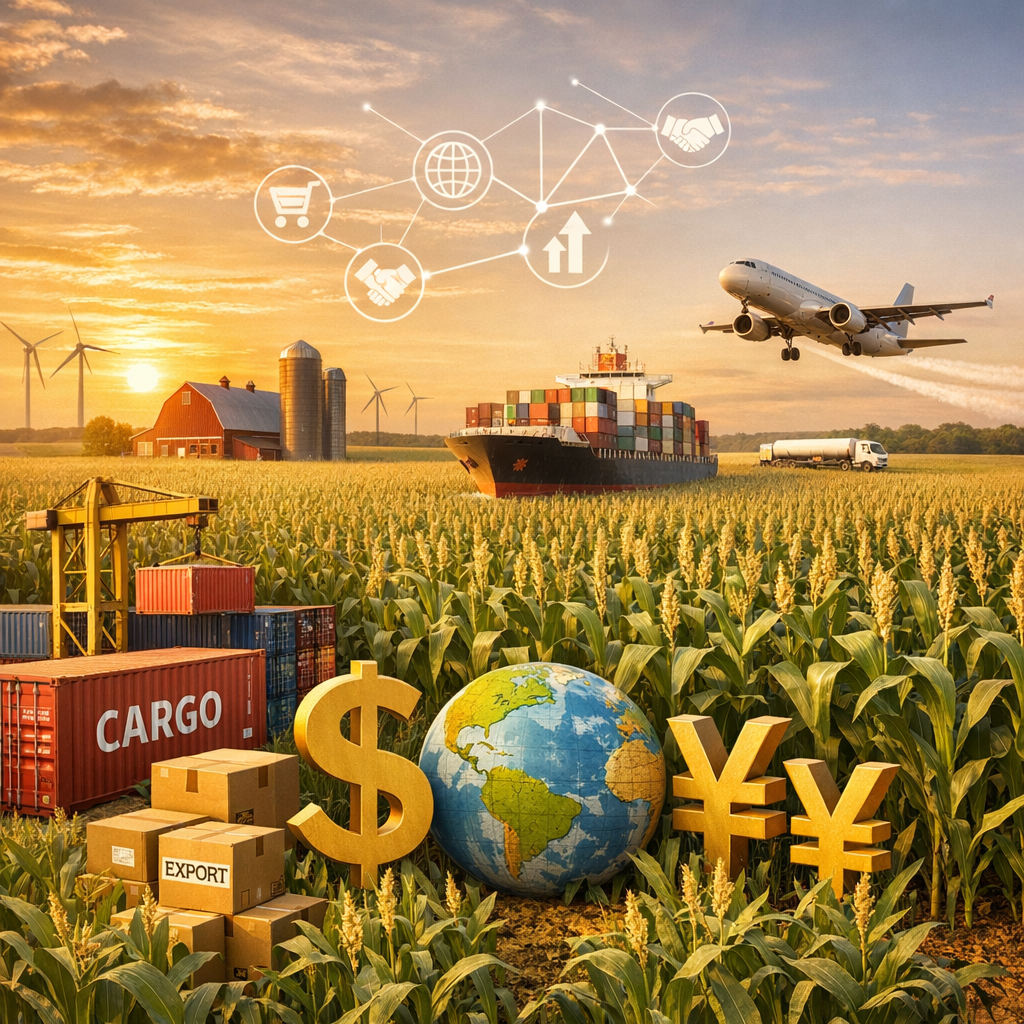
Iowa’s agricultural sector is deeply intertwined with global events, as international trade policies, climate change, and global health issues significantly influence the state’s economy and farming practices.
Trade Policies and Tariffs
International trade policies, including tariffs, have a profound impact on Iowa’s agriculture. For instance, in 2025, Iowa exported $1.2 billion worth of corn, making it the nation’s top corn exporter. However, fluctuating tariffs have introduced uncertainty for farmers and small businesses reliant on exports. Aaron Lehman, president of the Iowa Farmers Union, noted that increased tariffs raise the price of Iowa’s products for global buyers, making them less competitive compared to those from other regions. This situation affects not only farmers but also local machinery dealers, input suppliers, and financial institutions. [Source: KXCV-KRNW]
Climate Change
Climate change presents another significant challenge. The Midwest has experienced warming temperatures and increased annual precipitation, leading to more frequent extreme weather events. These changes affect farming practices, water quality, and overall public health in Iowa. [Source: Wikipedia]
Global Health and Food Security
Global health issues also intersect with Iowa’s agriculture. In September 2025, Governor Kim Reynolds delivered a keynote address at DialogueNEXT in New Delhi, India, discussing agricultural innovations to improve global food security. This engagement highlights Iowa’s role in addressing worldwide food challenges. [Source: Governor Kim Reynolds]
Understanding these global dynamics is crucial for Iowa’s agricultural community to navigate challenges and seize opportunities in an interconnected world.