

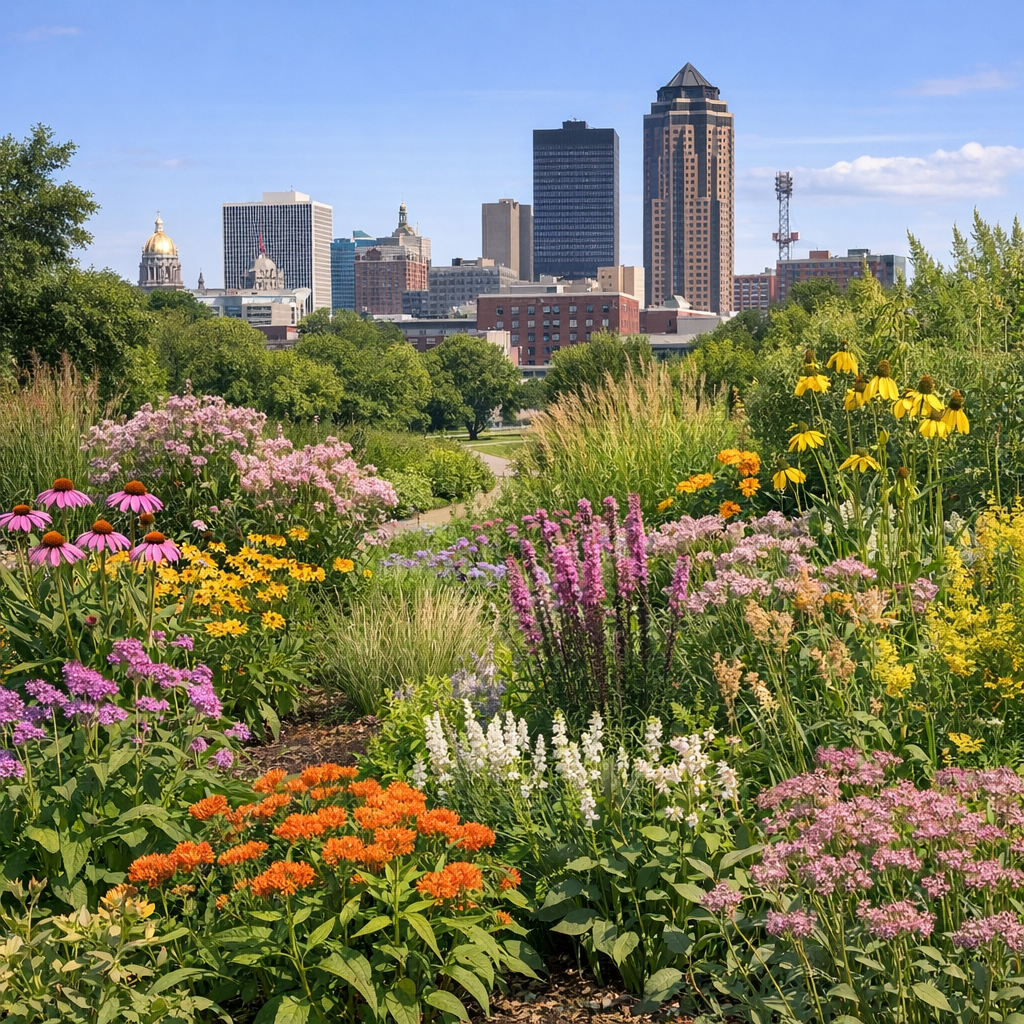
Des Moines’ climate, characterized by warm, humid summers and cold, dry winters, presents unique challenges and opportunities for local gardeners and environmental enthusiasts. One effective strategy to enhance our urban landscape and support biodiversity is the incorporation of native plants into our gardens and public spaces.
Understanding Des Moines’ Climate
Situated in the heartland of the United States, Des Moines experiences a humid continental climate. Summers are warm and humid, with average high temperatures reaching 86°F (30°C) in July. Winters are cold, with average lows dipping to 17°F (-8°C) in January. Annual precipitation averages around 36.55 inches, with snowfall averaging 36.5 inches per season. These conditions influence the types of vegetation that thrive in our region.
The Importance of Native Plants
Native plants are species that have evolved in a specific region over thousands of years. They are well-adapted to local climate conditions and soil types, making them more resilient and easier to maintain than non-native species. Incorporating native plants into our landscapes offers several benefits:
- Environmental Benefits: Native plants require less water and fewer chemical fertilizers and pesticides, reducing environmental pollution and conserving resources.
- Biodiversity Support: They provide essential habitats and food sources for local wildlife, including pollinators like bees and butterflies. For instance, milkweed is the sole host plant for monarch butterfly larvae.
- Soil Health: Deep-rooted native plants improve soil structure, enhance water infiltration, and reduce erosion.
Local Initiatives Promoting Native Plant Use
Several organizations in Des Moines are actively promoting the use of native plants:
- Plant Iowa LLC: Founded in 2025, this native plant nursery focuses on local ecotype seeds and creating pollinator gardens. They aim to restore homeowners’ landscapes with native plants, believing that widespread use can create habitats where wildlife can flourish.
- Sprout Garden at Drake University: This urban youth learning garden educates visitors on the importance of native plants. They highlight that historically, 70-80% of Iowa’s landscape was tallgrass prairie, emphasizing the role of native plants in improving air and water quality and increasing community biodiversity.
- Franklin Avenue Library’s Prairie Roots Project: In partnership with Des Moines Parks and Recreation, the library installed a large prairie root specimen to educate visitors about the significance of native perennial plants in both rural and urban Iowa landscapes.
Getting Started with Native Plants
For residents interested in incorporating native plants into their landscapes, consider the following steps:
- Research Suitable Species: Identify native plants that thrive in Des Moines’ climate. Resources like Plant Iowa LLC offer plant inventories tailored to our region.
- Plan Your Garden: Design your garden to include a variety of native species that bloom at different times, providing continuous support for pollinators.
- Source Plants Locally: Purchase plants from local nurseries specializing in native species to ensure they are well-adapted to our environment.
- Engage with Community Initiatives: Participate in local programs and workshops to learn more and connect with fellow gardening enthusiasts.
By embracing native plants, we can create sustainable landscapes that not only beautify our surroundings but also support the health of our local ecosystem. Let’s take proactive steps to integrate these plants into our gardens and public spaces, contributing to a greener and more vibrant Des Moines.