

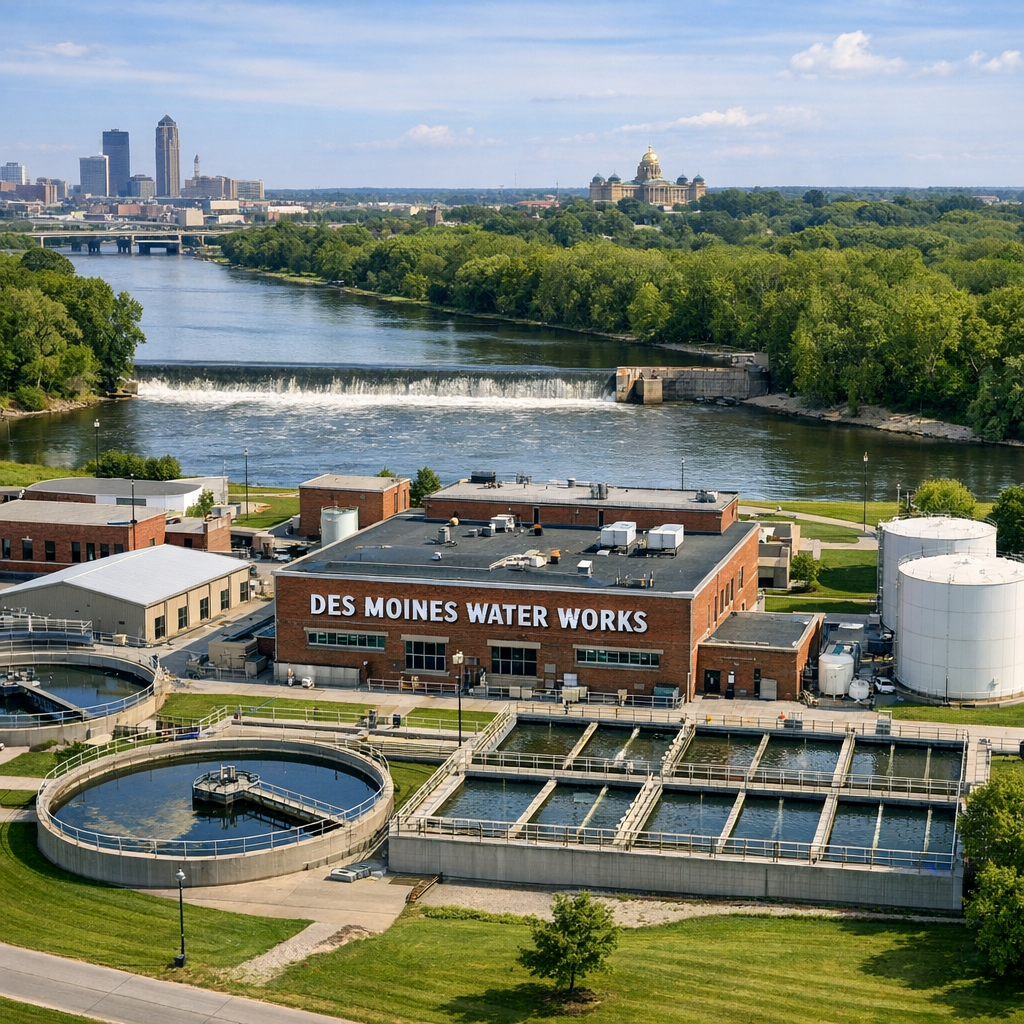
Des Moines is confronting a significant challenge as elevated nitrate levels in the Raccoon and Des Moines rivers threaten the safety of the city’s drinking water. These rivers serve as primary sources for the region’s water supply, and the rising nitrate concentrations have raised alarms among local officials and residents.
Understanding Nitrate Contamination
Nitrates are compounds commonly found in fertilizers and animal waste. When these substances enter waterways through agricultural runoff, they can lead to contamination. High nitrate levels in drinking water pose health risks, particularly for infants, potentially causing conditions like methemoglobinemia, or “blue baby syndrome.”
Recent Developments
In June 2025, the Central Iowa Water Works (CIWW) implemented a lawn watering ban to reduce water demand and ensure the treatment capacity could handle the elevated nitrate levels. This measure aimed to maintain compliance with federal drinking water standards. The ban was a response to nitrate concentrations nearing the federal limit of 10 milligrams per liter, a threshold established to protect public health.
Despite these efforts, challenges persist. In August 2025, the U.S. Environmental Protection Agency (EPA) rescinded the designation of segments of the Raccoon and Des Moines rivers as impaired waters. This decision was met with opposition from the Des Moines Water Works Board of Trustees, who expressed concerns that the reversal did not align with the operational and financial realities of treating water with high nitrate concentrations.
Community Impact and Response
The rising nitrate levels have prompted discussions about the effectiveness of current agricultural practices and the need for more robust water quality management strategies. While voluntary measures have been promoted to reduce runoff, their effectiveness has been questioned. The Iowa Environmental Council has highlighted that voluntary actions have proven ineffective in significantly reducing pollution in the Mississippi River, a situation that mirrors the challenges faced in Des Moines.
Local authorities continue to monitor the situation closely, emphasizing the importance of community cooperation in adhering to water usage guidelines and supporting initiatives aimed at improving water quality. Residents are encouraged to stay informed about water safety updates and participate in community efforts to address this pressing issue.