

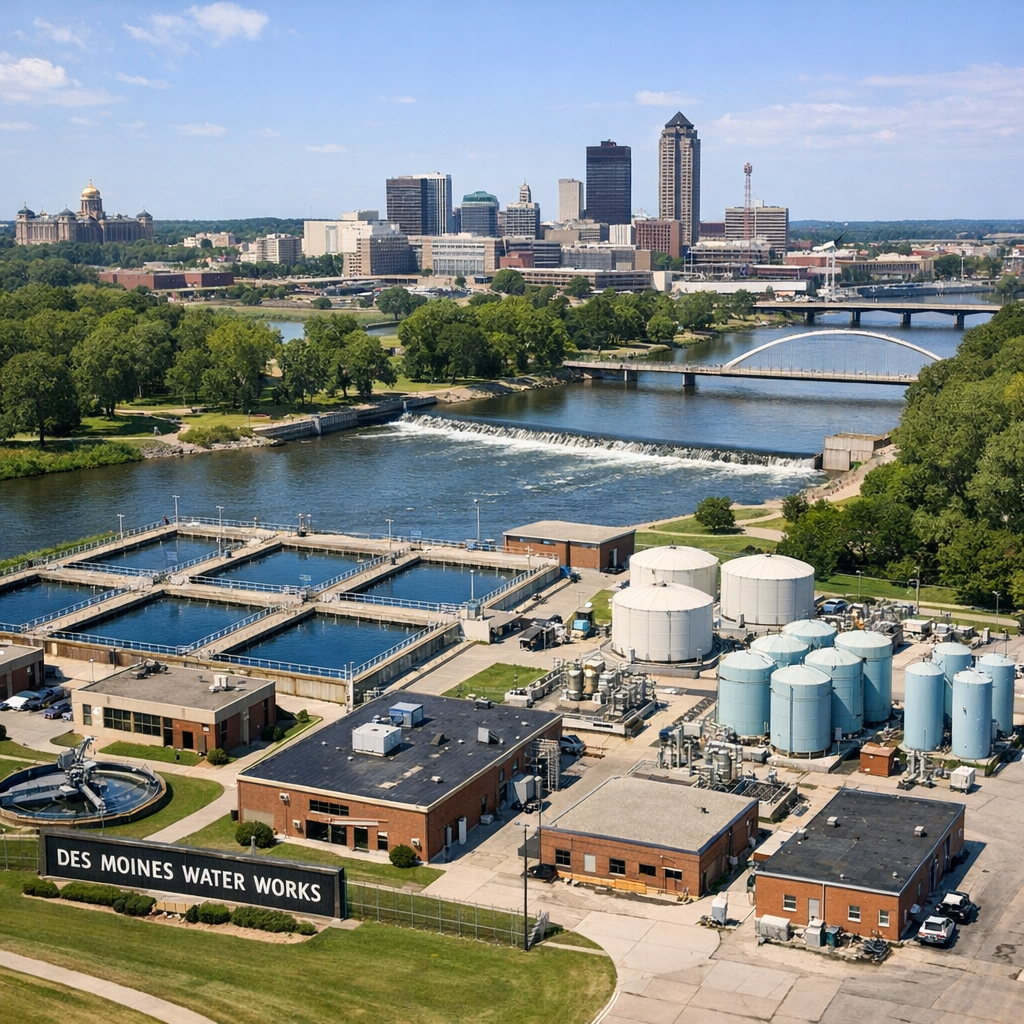
Des Moines continues to grapple with significant water quality concerns, particularly due to elevated nitrate levels in the Raccoon and Des Moines rivers. These rivers serve as primary sources for the city’s drinking water, and the rising nitrate concentrations pose challenges for water treatment processes.
Elevated Nitrate Levels and Their Impact
In recent years, nitrate levels in these rivers have approached the federal limit of 10 milligrams per liter, prompting local utilities to implement measures such as lawn watering bans to reduce water demand and ensure safe drinking water. Elevated nitrates, often linked to agricultural runoff, can pose health risks, including conditions like blue baby syndrome in infants.
Utility Responses and Challenges
Central Iowa Water Works (CIWW), serving approximately 600,000 residents, has faced operational and financial challenges in treating water with high nitrate concentrations. The utility has had to intensify treatment efforts, leading to increased costs and operational strain. In response, CIWW has implemented measures like lawn watering bans to manage water demand and maintain water quality standards.
Regulatory Actions and Community Concerns
In August 2025, the U.S. Environmental Protection Agency (EPA) rescinded the designation of certain segments of the Raccoon and Des Moines rivers as impaired waters. This decision was met with opposition from Des Moines Water Works, which argued that the reversal did not align with the operational realities of treating water with high nitrate levels. The utility emphasized the need for continued recognition of the challenges posed by nitrate pollution to ensure the safety of the region’s drinking water.
Looking Ahead
As Des Moines continues to address these water quality challenges, collaboration between local utilities, regulatory agencies, and the community remains essential. Ongoing efforts to monitor and mitigate nitrate pollution, along with sustainable water management practices, will be crucial in safeguarding the city’s water supply for the future.