

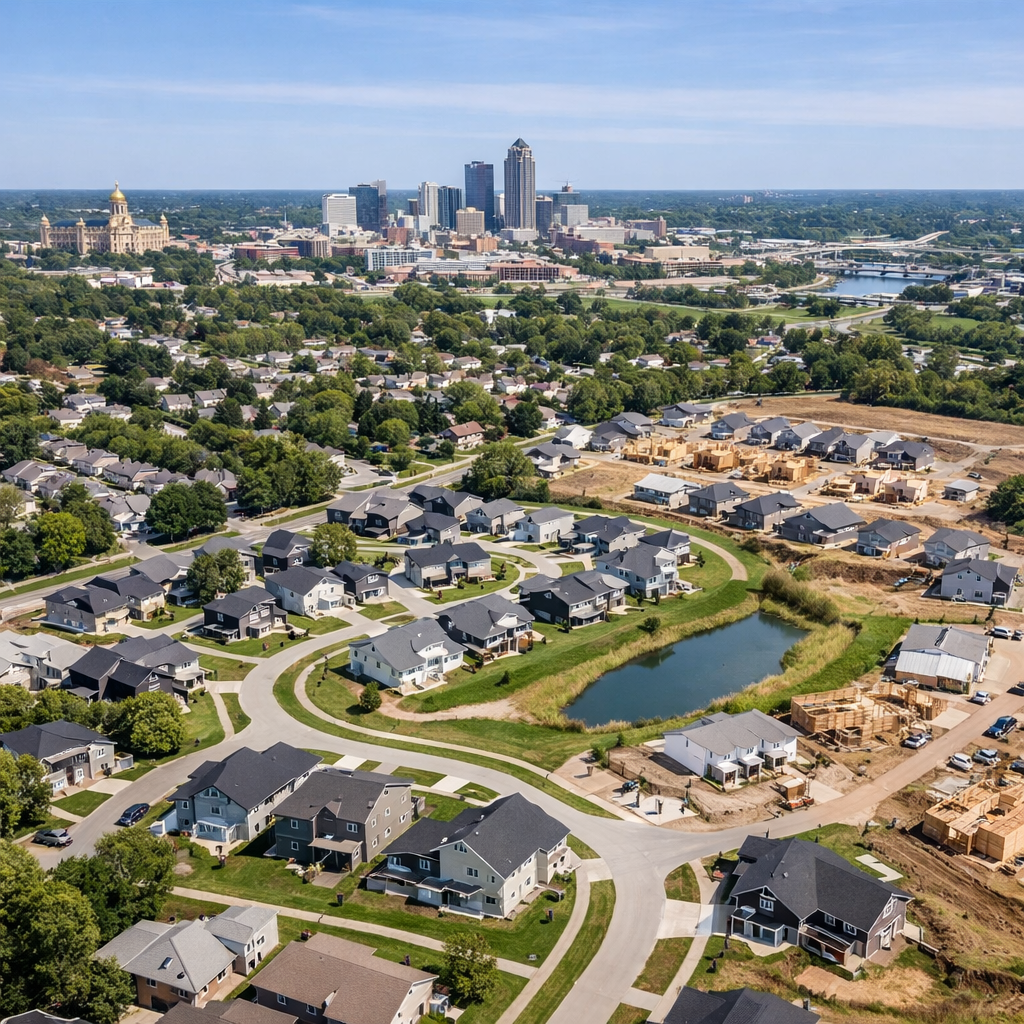
The Des Moines housing market is experiencing a period of adjustment, with several key trends and developments shaping the landscape.
Market Trends
Recent data indicates a slight decrease in home prices. In March 2026, the median sale price was $208,000, a 0.72% decline compared to the previous year. Homes are taking longer to sell, averaging 46 days on the market, up from 32 days last year. Additionally, the number of homes sold decreased from 221 to 206 in the same period. Source
Despite these shifts, the market remains somewhat competitive, with homes receiving an average of one offer. The median sale price per square foot is $196, reflecting a 1.5% decrease from the previous year. Source
Affordable Housing Initiatives
Efforts to address affordable housing are underway. The Polk County Housing Trust Fund has identified approximately 740 underutilized properties, including church parking lots and vacant office parks, that could be converted into affordable housing units. This initiative aims to provide housing for individuals earning at or below 80% of the area median income. Source
Additionally, Oakridge Neighborhood is planning a $15 million project called Cynergy, which will offer larger affordable housing units and a wellness-focused commercial hub on a long-vacant site in downtown Des Moines. Source
New Developments
Several new housing developments are contributing to the city’s growth. Bici Flats, a three-building apartment project on the edge of downtown, offers 154 market-rate units with panoramic views of the Des Moines skyline. Source
Another notable project is the Waterstreet Brownstones & Vine Street Lofts, an urban housing development comprising two four-story brownstone buildings with 34 townhouses and a five-story, 109-unit apartment building. These developments share a 50,000 square foot underground parking garage and feature modern amenities. Source
Future Outlook
Looking ahead, the housing market in Des Moines is expected to shift toward more balanced conditions. Home prices are projected to rise modestly by 2-4%, and inventory levels are forecasted to increase by 5-10%, providing buyers with more options. Wage growth outpacing home price appreciation is anticipated to improve long-term affordability prospects. Source
Overall, while the Des Moines housing market is undergoing changes, ongoing developments and initiatives aim to address affordability and meet the needs of the community.