

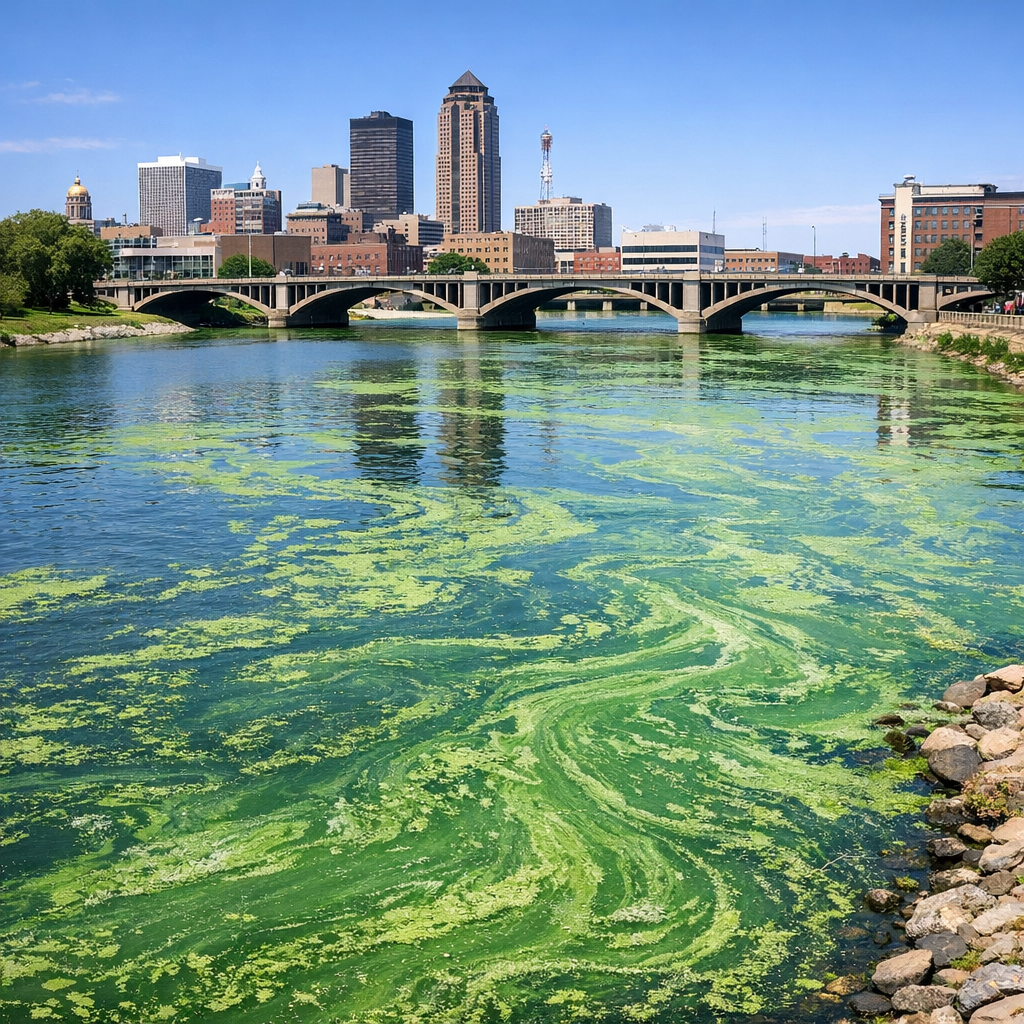
Des Moines continues to grapple with significant water quality concerns, particularly due to elevated nitrate levels in the Des Moines and Raccoon rivers. These rivers serve as primary sources for the city’s drinking water, and the rising nitrate concentrations pose challenges for water treatment facilities striving to meet federal safety standards.
Elevated Nitrate Levels and Their Implications
In recent years, nitrate levels in these rivers have approached the federal limit of 10 milligrams per liter. Elevated nitrates, often resulting from agricultural runoff, can pose health risks, including conditions like blue baby syndrome in infants. The Central Iowa Water Works (CIWW), which supplies water to approximately 600,000 residents, has had to implement intensive treatment processes to ensure water safety. In some instances, measures such as lawn watering bans have been enacted to reduce water demand and maintain treatment capacity.
Community and Environmental Responses
The Des Moines Water Works Board of Trustees has expressed opposition to the U.S. Environmental Protection Agency’s decision to rescind the designation of certain river segments as impaired waters. The Board emphasized that this reversal does not align with the operational challenges faced in treating water with high nitrate concentrations. Environmental groups have also voiced concerns, highlighting the need for sustained efforts to address water pollution and protect public health.
Looking Ahead
Addressing the persistent issue of nitrate pollution requires a collaborative approach involving local authorities, environmental organizations, and the agricultural sector. Implementing effective strategies to reduce agricultural runoff and investing in advanced water treatment technologies are crucial steps toward ensuring the long-term safety and quality of Des Moines’ drinking water.